Interview with the author: Margaret Cooze
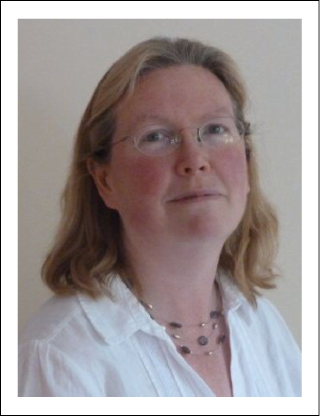
Margaret Cooze talks to us about her experience of creating exam content and ELT writing.
Margaret Cooze holds an MA in Applied Linguistics and an MSc in English Language Teaching Management, and has worked in senior roles at Cambridge English Language Assessment and Cambridge Assessment International Education. She is the author of several ELT resources published by Cambridge University Press, and in 2020 she published her first book with us.
How long have you worked in English-language education, and why did you choose this as a career?
I started teaching 30 years ago. Like many teachers of English as a foreign language I travelled a lot and while I was in Australia met someone whose daughter was learning Japanese. I’d never heard of anyone learning languages other than French, Spanish or German and was drawn to the idea. So I went and did my first teaching certificate and headed off to Japan for three years. I loved being a beginner in a language while I was teaching it. I think that gave me a real insight into what my learners were going through. My Japanese got quite good, although I've forgotten a lot now. My plan was to continue to teach in other countries, but when I started teaching in the UK I realised I really liked teaching multinational classes.
How would you describe the difference in language mastery between B2 and C1?
I think it’s the most difficult jump between CEFR levels. While there is probably some new grammar to learn, it’s often about how you use structures for different purposes, some of which are quite subtle. Of course, vocabulary at this level is less high frequency so it can be harder to learn as easily. But to be a C1 user, a really wide range of vocabulary is definitely needed. I think at C1 we expect a significantly higher level of fluency too. C1 leaners need to be able to process language more quickly, in both reading and listening and to know how to use strategies for these skills to infer meaning to unknown lexis effectively. Being a keen reader of a wide range of texts and an active listener to things like podcasts and radio shows really helps to develop this fluency.
Which parts of the Cambridge exams do you think students struggle with the most?
I always remember the fear that some of my learners had of the Speaking test in their Cambridge exams. But that’s natural when you have a real-life examiner in front of you! But I think it is probably Writing that is the most challenging. In my experience, learners either leap into a piece of writing without thinking about how it will be structured, or else they focus so heavily on getting everything completely accurate that they aren’t ambitious and don’t show the full range of what they know. I am a firm believer in planning for writing. I do it when I write important things in English and maybe spend as much time planning as I do writing the final piece. A really good plan for writing, showing all the good vocabulary that is relevant to the piece, and the complex structures that a learner knows, will allow them to really show the examiner their range, and this allows them to focus on ideas during planning, and accuracy during writing up from the plan.
What are the challenges in writing assessment pieces for Cambridge exams?
That’s an easy question! Thinking of new ideas, or at least a new slant on an existing idea. It seems as if everything has been ‘done’! But amazingly Cambridge Exam writers keep finding new texts, tasks and questions. Of course, they can’t be so different that they seem strange to the learners taking the exams, but they need to be different from what has gone before. When I was in the classroom, I spent my time looking for material to use in class all the time. Now I do the same, but it’s for using in exam material! I still make notes constantly on things I find that I think will be useful.
Is there any one, last-minute technique or piece of advice that you would give a student about to sit their exam?
I think a key element of all of the papers in Cambridge exams is recognising how to say the same thing in another way. I’ve been writing C1 Sentence Transformations recently (English Master C1 Key Word Transformation, 2020) and I think these are a really good test of language ability. And, in fact, most parts of Cambridge tests are based on this idea. In listening and reading comprehension, the question is likely to be a paraphrase of the relevant part of the text. In speaking, if you can paraphrase what your partner is saying when you carry on a conversation, you show your language range. It’s a key skill in all papers.
This may sound strange, but when you are checking your work – when you have finished a part of the test or a piece of writing – sit on your hands! So often I watch learners proof-reading while rearranging the pens of their desk or tidying rough paper. You can’t concentrate on both things. Sit on your hands and only move them when you want to make a correction. And in the writing paper, when you proof-read your writing, check one thing at a time. If you know you make certain spelling mistakes, look for those words on one read through, then maybe check articles on the next read through, and so on. It might sound time-consuming, but it’s a good technique.
What are you currently working on and what will you be doing next?
I have a few things I’m involved with at the moment. I’m lucky to have two areas that I work on – English language and Assessment. I’m working on some digital support material for a secondary-level textbook at the moment. I’m enjoying that as it’s about presenting grammar and activities for teachers to use digitally with their classes, and it’s really interactive. I’m also working with an examinations organisation to devise their model for grading exams and how this will be reliable and give accurate results to the exams that they make. These two pieces of work are very different from each other, but both are interesting.