Interview with the authors: Billie Jago and Monica Ruda-Peachey
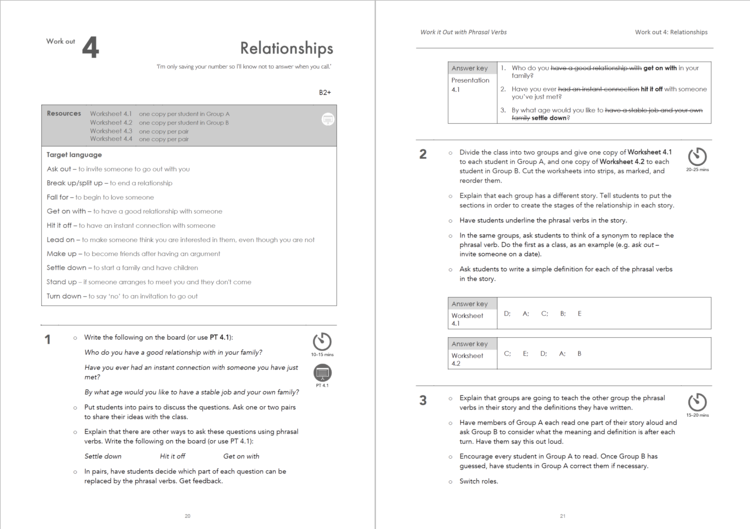
Billie Jago and Monica Ruda-Peachey talk to us about their latest publication Work It Out with Phrasal Verbs, the collaborative writing process and how the global COVID-19 pandemic has affected their working practices.
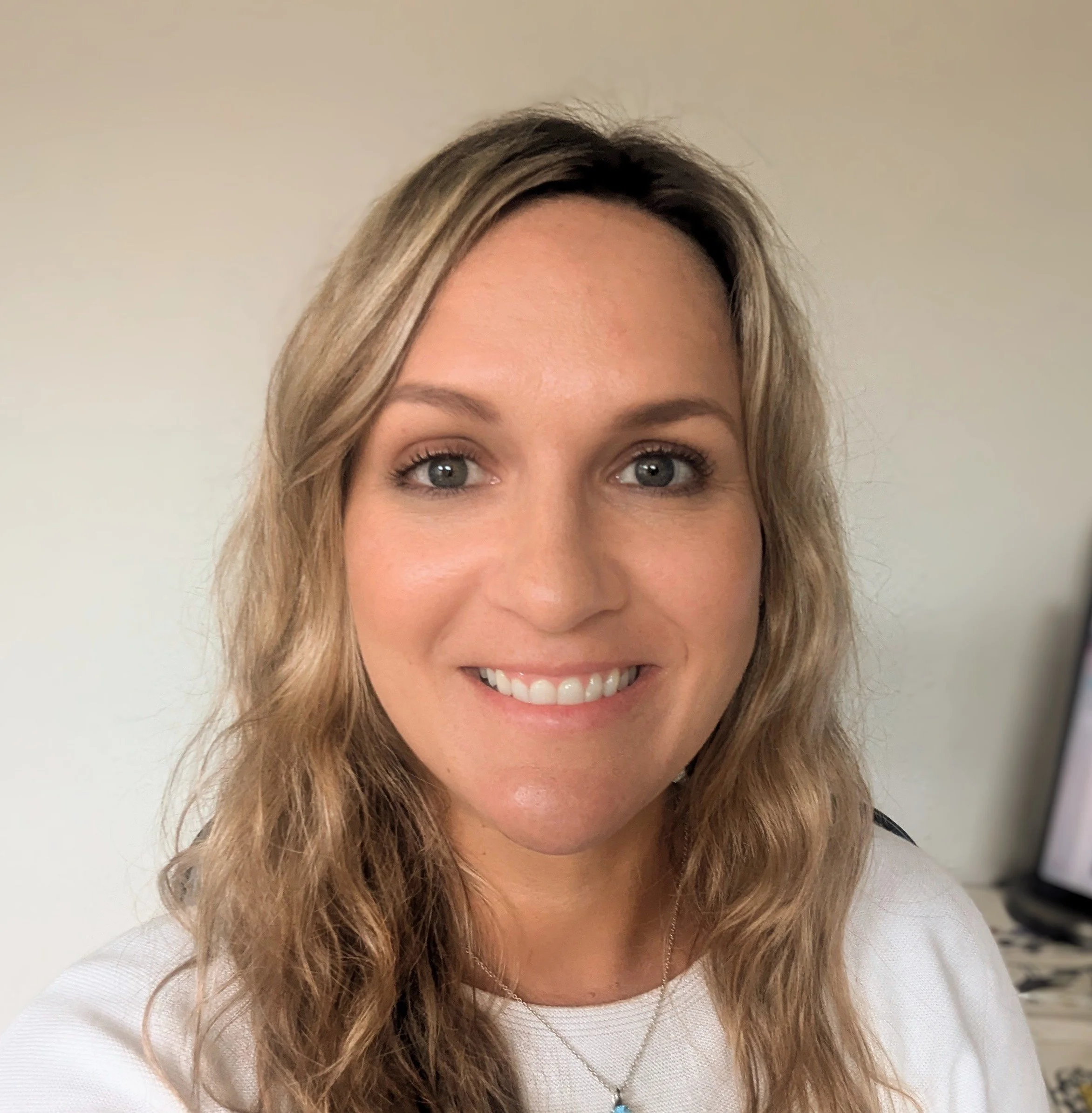
Billie Jago is an ELT writer, consultant and teacher trainer who creates digital learning materials and assessment resources for National Geographic and Pearson Education. Having previously taught internationally, she now delivers online training seminars to global teaching audiences.

Monica Ruda-Peachey is an ELT writer who creates digital and print teaching resources and exam items. She is a DELTA-qualified ESL teacher and Trinity-certified teacher trainer with extensive experience teaching English to international students in the Czech Republic, Italy and the UK.
What prompted you to write a phrasal verbs teaching resource?
Billie: We were both working as teachers at the time. We realised that most teaching materials group phrasal verbs according to their particle or verb, and that students seemed to find it tricky to remember or use them based on this. There were often groans when phrasal verbs were introduced in lessons, as students didn’t really have a context to put them in as there was often not enough practice or any topic-based lessons on phrasal verbs themselves. We were both familiar with a photocopiable book that had communicative activities for collaborative learning, and it gave us the inspiration to write an easy-to-use solution for using phrasal verbs communicatively.
Monica: Billie and I were both working at the same language school in Cambridge when we came across similar issues while teaching phrasal verbs. Students found them difficult to remember and to use naturally. The resources available had a traditional way of teaching phrasal verbs – either grouped by verb or by particle, but neither of us felt this was an effective way of presenting them to our students. So we put our heads together and created the materials that are now in Work It Out with Phrasal Verbs.
How would you describe the writing process, split between two authors?
Billie: Monica and I work extremely well together, and we always bounced our initial topic ideas off each other before writing the units. We began by writing the first units together at any time we could find (between lessons, lesson planning and other teacher-related admin!), and then gradually began writing units individually and checking that there was no overlap in the communicative activities we’d each come up with. We both have different styles of teaching and writing, so it was an excellent collaboration because it allowed us to learn from each other, share ideas and open our minds to new methods and activities in teaching.
Monica: I couldn’t have had a better writing partner! Although we started writing the units together, we soon realised that working independently on different units and parts of the book, and then checking each other’s work with a fresh pair of eyes, was the way forward. Of course, we kept in contact every day to bounce ideas off of each other!
What challenges did you encounter when preparing Work It Out with Phrasal Verbs?
Billie: I think we were initially unsure of how much detail to go into around explaining phrasal verbs themselves in the Phrasal Verb overview section. We see our book as a teaching resource that can be used as standalone lessons or as a supplement to common ELT topics in a coursebook, so we were aware that we didn’t want to position our book as a grammar/vocabulary guide. We do have an overview of separable and inseparable phrasal verbs, which we believe covers the general, ‘need-to-know’ of phrasal verbs, but in subsequent editions at a higher level, this may be expanded into transitive and intransitive explanations.
Monica: Writing the digital alternative activities was the biggest challenge for me, as I haven’t had much experience with online teaching. However, we both knew that offering digital options was a must, given that technology has become an integral part of teaching and learning. We were determined to include activities that could be carried out in an online classroom and/or in a blended-learning environment.
Have you received feedback from teachers who have used the resource?
Billie: We’ve been overwhelmed by the support we’ve received; from the interactivity from teachers in our webinars to the excellent feedback we’ve received from teachers who have used our book in class or in online lessons, we are very grateful. We’ve also just had our first independent review by ELTplanning.com, who gave us an amazing 4.5/5!
Monica: Both Billie and I have been over the moon with the feedback so far! We were delighted with the wonderful comments from the participants in our webinars and the impressive 4.5/5 review from ELTplanning.com. Just a couple of days ago, the founder of Openness wrote a lovely review (posted on the Prosperity Education blog), after using Work It Out with Phrasal Verbs in her online lessons. Thank you!
How would you describe the experience of working with Prosperity Education?
Billie: Having previously worked with Prosperity Education on another title (Use of English: ten practice tests for the Cambridge C1 Advanced), I’d be happy to recommend them to any author! There is constant communication from start to finish, and they are always available to answer any questions very promptly. The timeline to production is speedy yet thorough, and I hope to work with them again in the future.
Monica: Both Billie and I had already worked with Prosperity Education and we knew that we were going to receive full support throughout the process. There’s always been clear communication, which I believe is key to a successful work relationship, especially in this line of work. I am grateful for what Prosperity Education has offered me so far, and I would gladly work with them again.
In what ways (good and bad) do you think the global pandemic has affected English language teaching?
Billie: On the whole, I feel the ELT industry has been neglected in many ways during the pandemic, as this is a huge sector which has largely been ignored, and in turn, many long-standing language schools have had to close their doors. I’m based in the UK, and schools I previously worked at here that had 15–20 classes going at one time, are now down to 2–3. It’s a shame, and something that I think will take a very long time to recover, if in fact it ever does. Of course, most teachers and students are now working online, and I believe this is still the case for many people around the world even after any lockdowns. This may continue to be the case long into the future.
Monica: Unfortunately, many language schools have had to close due to the pandemic and have had to quickly react to this situation in order to survive, moving to online teaching. As a result, a large number of ELT teachers have been made redundant, while others have had to find additional or alternative sources of income. Luckily, teachers are typically very resourceful and resilient individuals, and many have decided to explore different paths within the ELT industry.
How has the COVID-19 pandemic affected your own working processes?
Billie: Meetings with publishers are now all online, as well as any training days or conferences, which just isn’t the same! Monica and I also took to Zoom to go through the proofs of Work It Out with Phrasal Verbs, and once even made our marketing notes while I was driving, while Monica was on the other end of the phone! Of course, I wasn’t doing the writing in that meeting...!
Monica: Well, I’ve had to develop my digital skills faster than I had ever expected! I am now quite comfortable using a number of communication platforms ... and I never thought I’d say that! Another noticeable difference is that I have a lot more work-related chat groups on my phone than before – what a great way to keep connected!
If there was one piece of advice you could give to teachers looking to improve their students’ comprehension of phrasal verbs, what would it be?
Billie: Always teach phrasal verbs in a topic-based context as students will be much more likely to remember and use them this way. Allow plenty of opportunities for personalisation, so students can relate the language to their own, real-world usage.
Monica: Choose the phrasal verbs you want to teach according to the topic of your lesson; provide ample opportunity for practice with a purposeful consolidation task that students can personalise.