 Image 1 of 5
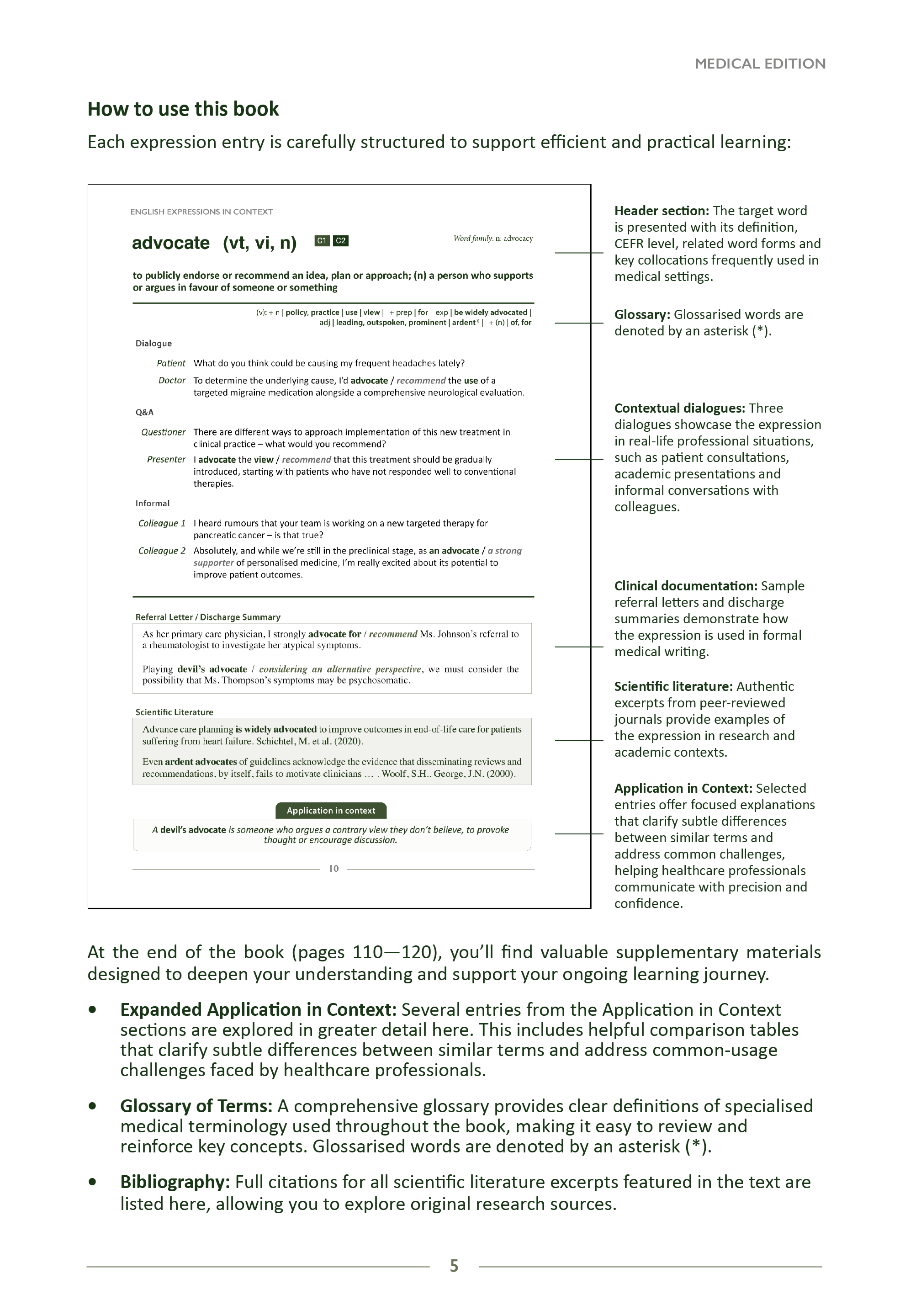 Image 2 of 5
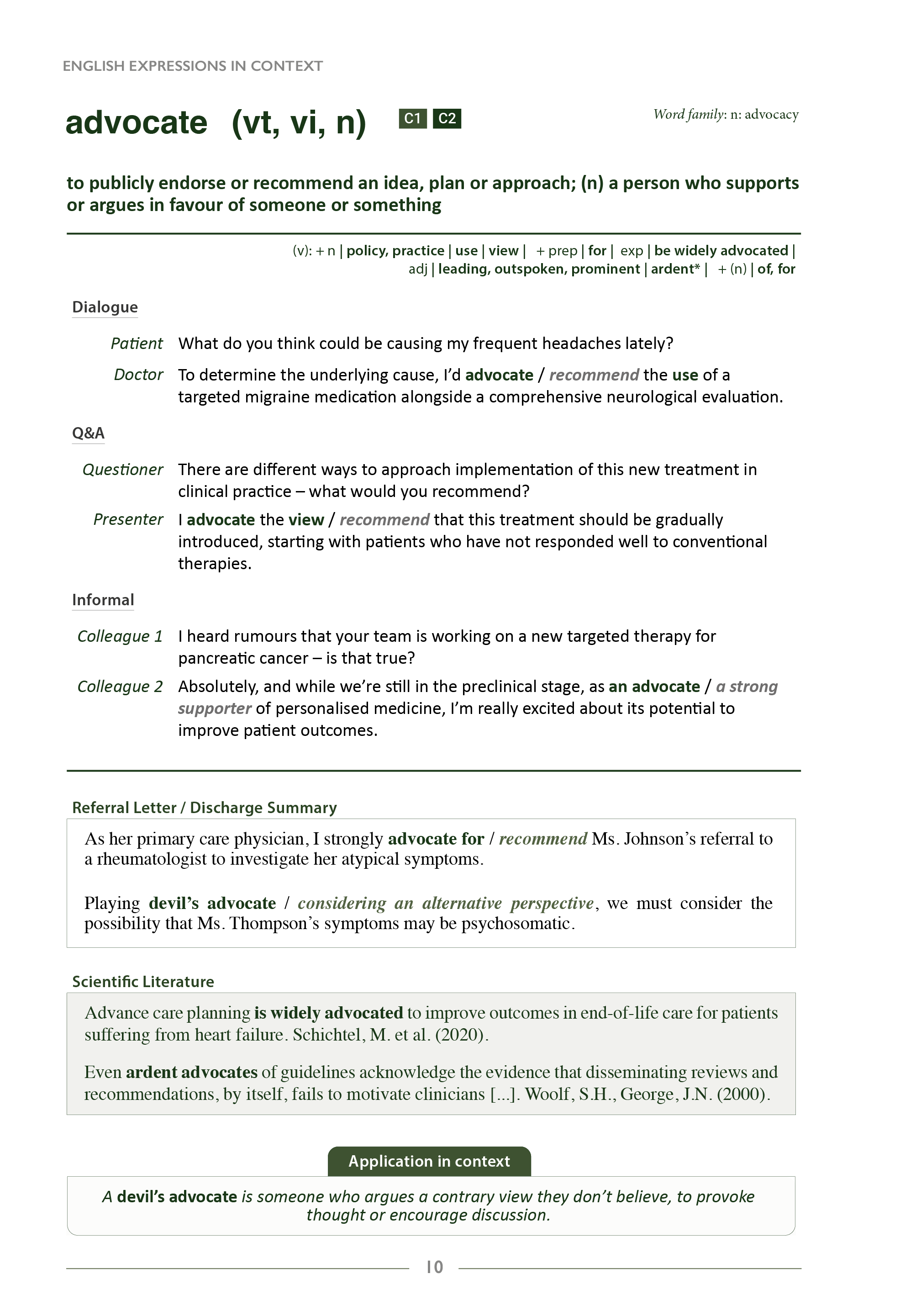 Image 3 of 5
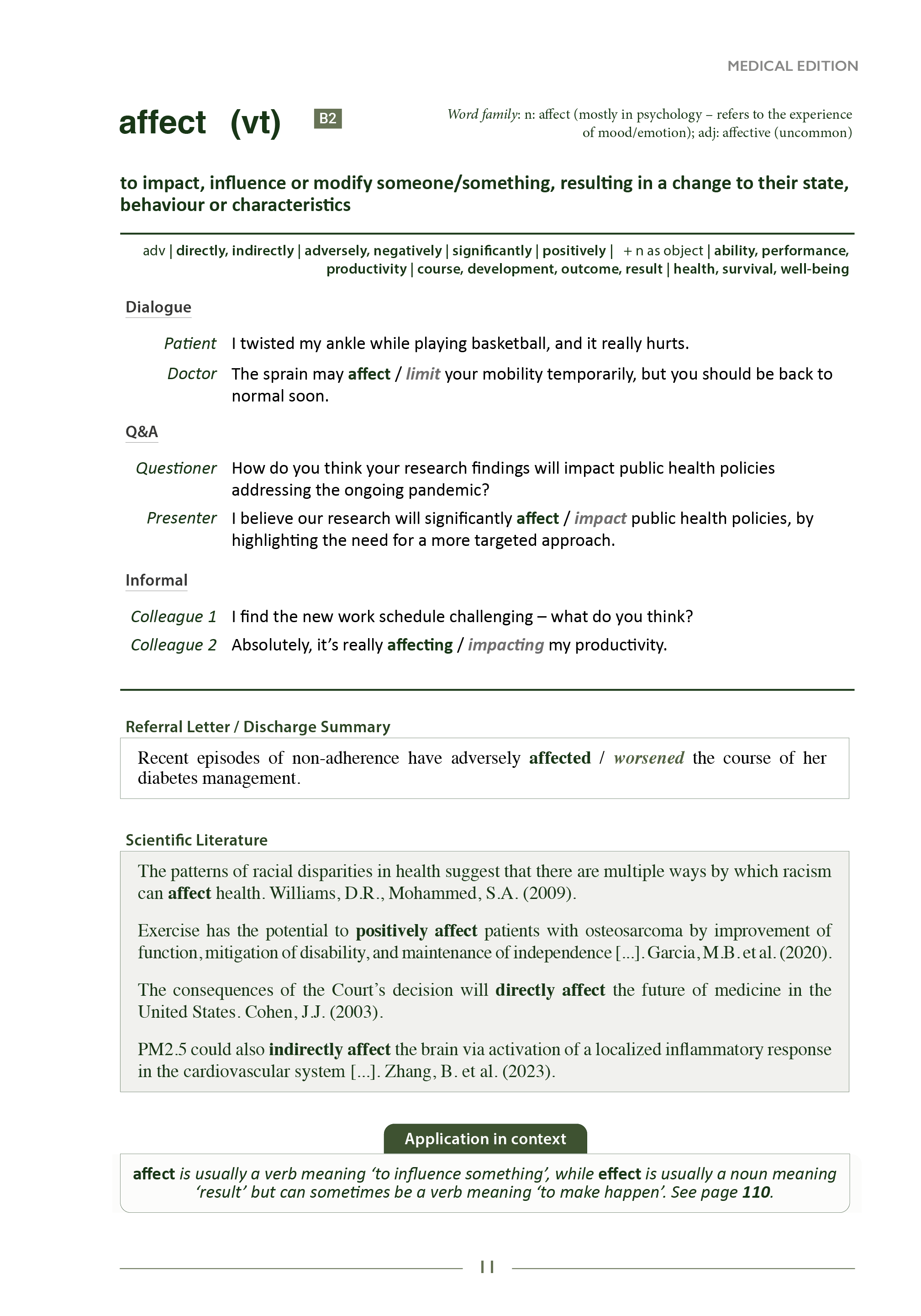 Image 4 of 5
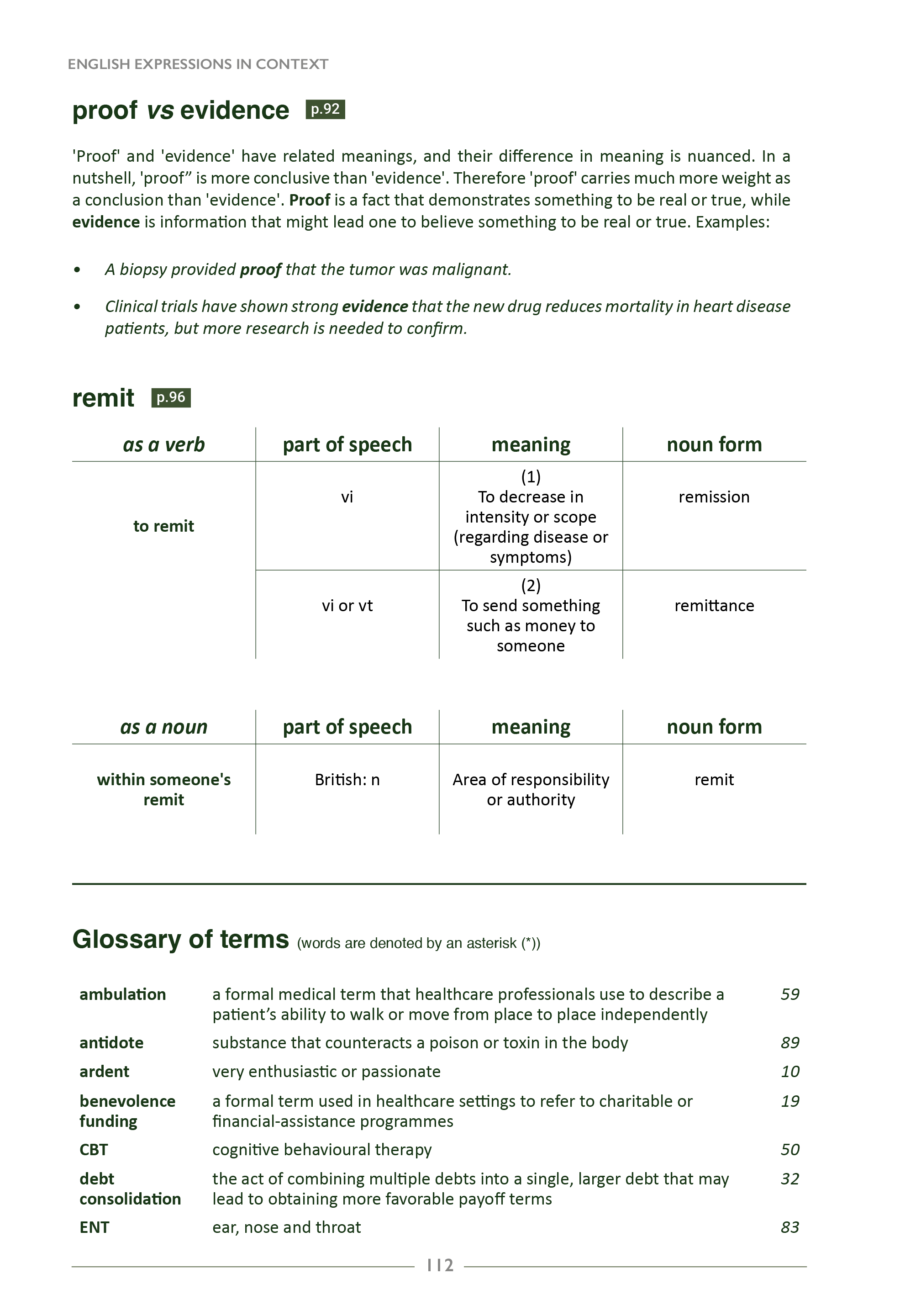 Image 5 of 5
Want to sound more confident and natural when speaking or writing in medical English?
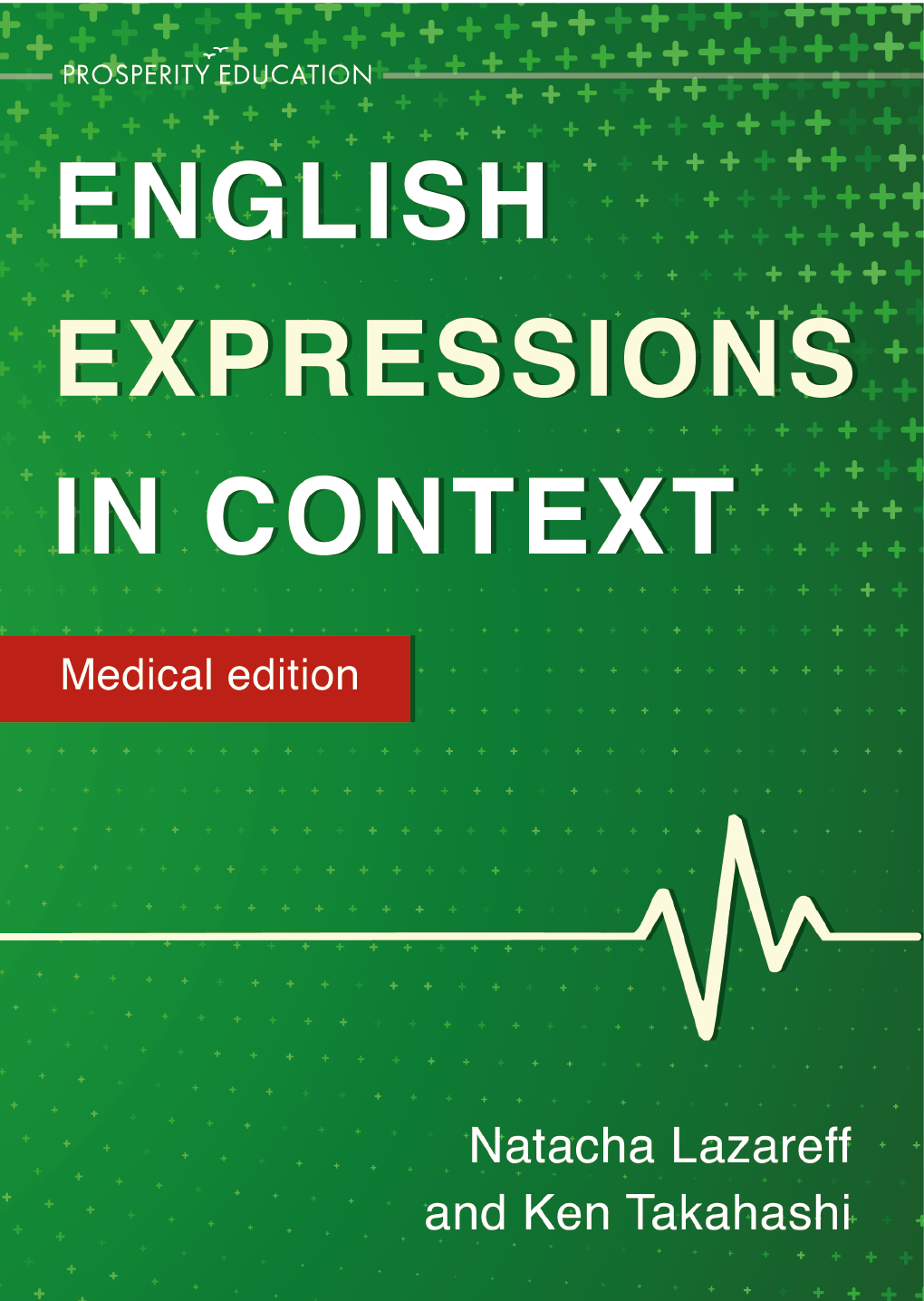
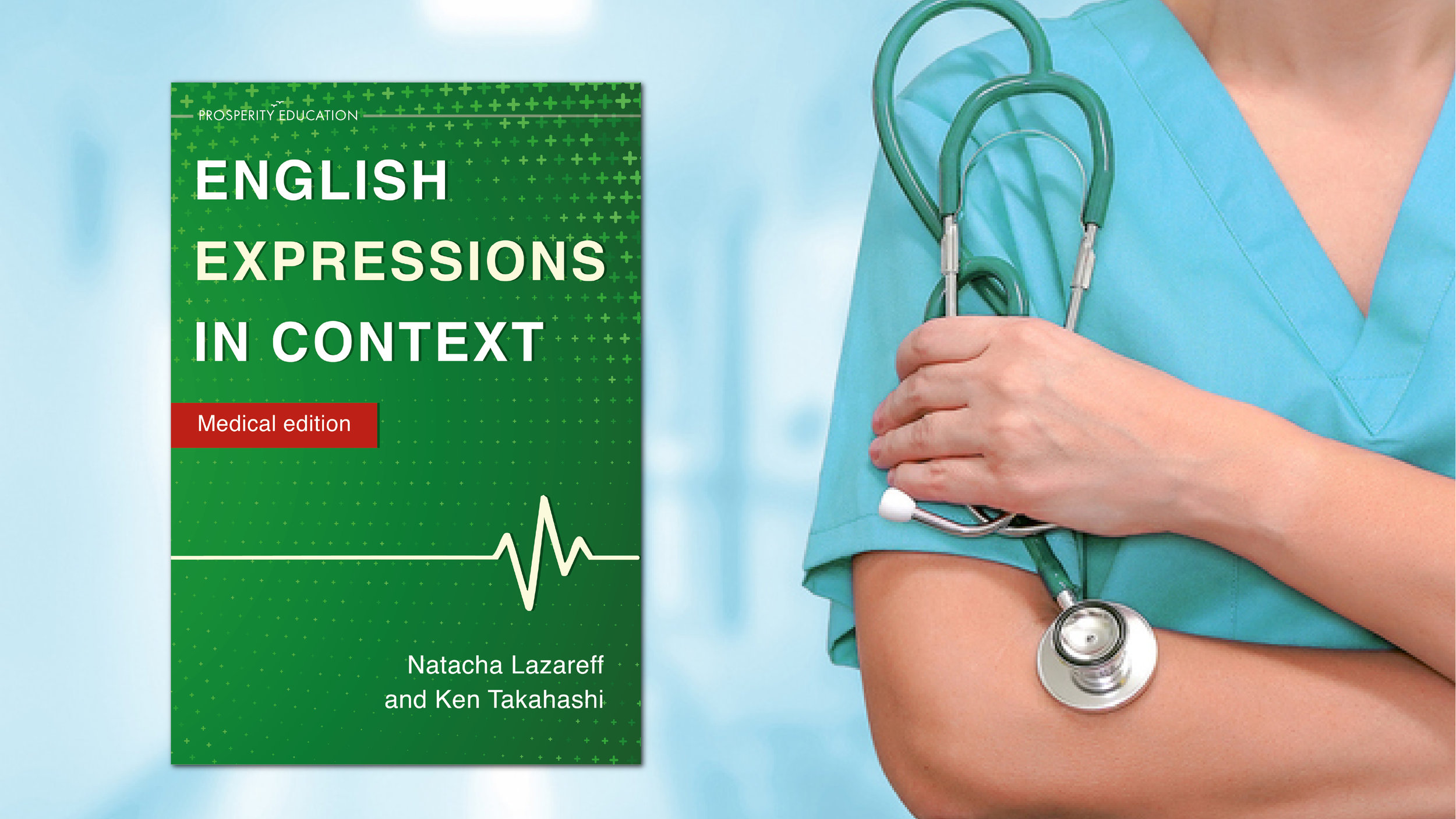
English Expressions in Context: Medical Edition helps you do just that.
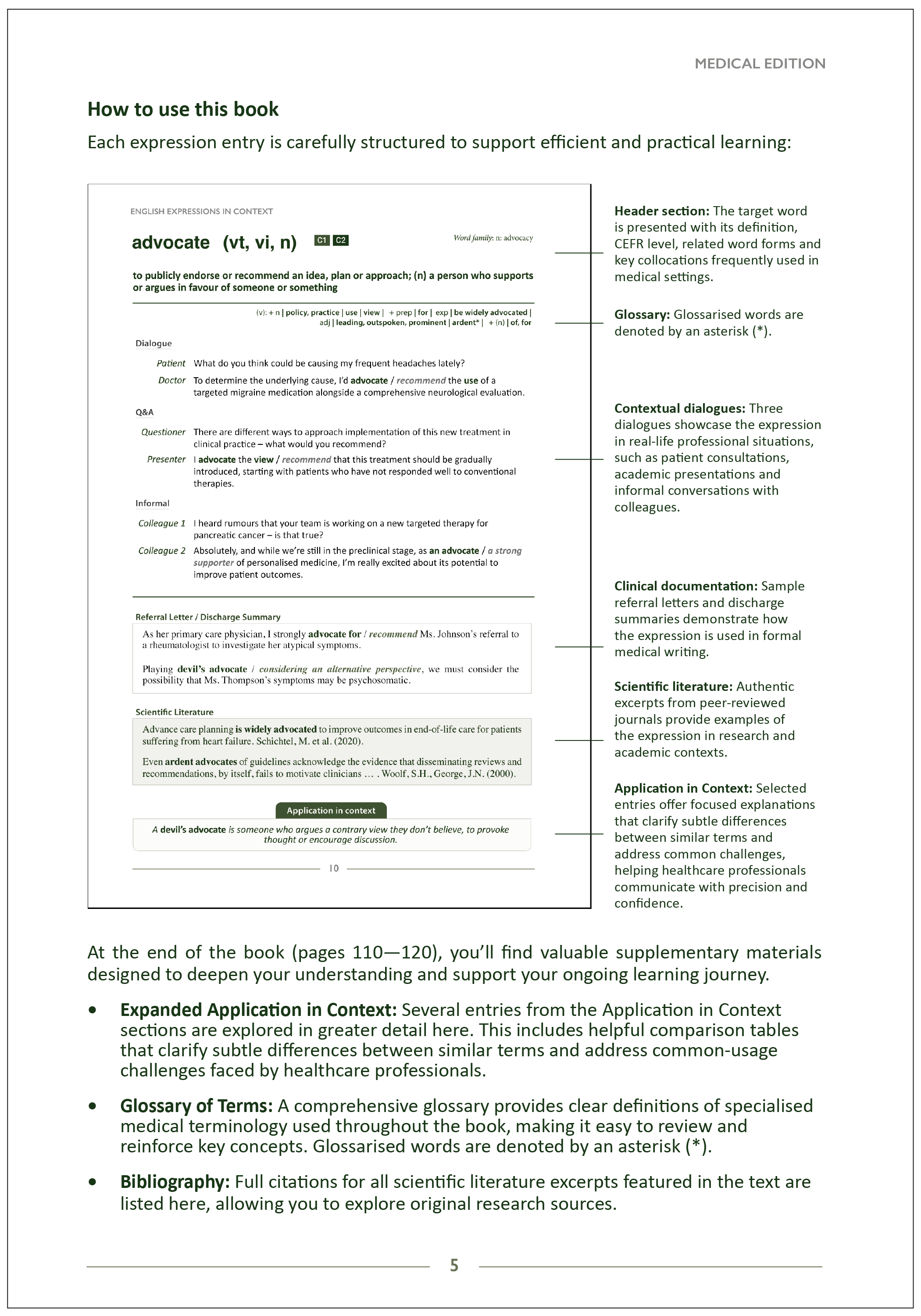
This practical book introduces 101 essential medical words and expressions, showing you not just what they mean but how to use them naturally in real professional situations. Through authentic dialogues, clinical examples and realistic practice tasks, you’ll learn the collocations, expressions and communication styles that make medical English sound fluent and professional.
Perfect for doctors, nurses, medical technicians and healthcare students, this book is also a great resource for those preparing for the Occupational English Test (OET). The sample dialogues and writing models reflect real OET scenarios, helping you build the confidence to communicate clearly and effectively at work and in exams.
-
1. Accommodate (vt)
2. Acquiesce (vi)
3. Advocate (vt, vi, n)
4. Affect (vt)
5. Aggravate (vt)
6. Aggregate (vt, adj)
7. Anecdotal (adj)
8. Anomaly (n)
9. Appraise (vt)
10. Attenuate (vt)
11. Battered (adj)
12. Benevolent (adj)
13. Bolster (vt)
14. Circumvent (vi)
15. Cognitive (adj)
16. Compensate (vi)
17. Compound (vt)
18. Concede (vt, vi)
19. Concurrent (adj)
20. Conducive (adj)
21. Confer (vt, vi)
22. Congruent (adj)
23. Conjure (vi, vt)
24. Consistent (adj)
25. Consolidate (vt, vi)
26. Contradict (vt, vi)
27. Contravene (vt)
28. Corroborate (vt)
29. Credible (adj)
30. Culminate (vi)
31. Cumulative (adj)
32. Debilitate (vt)
33. Deduce (vt)
34. Deem (vt)
35. Deficient (adj)
36. Defy (vt)
37. Deplete (vt)
38. Deviate (vi)
39. Diminish (vi, vt)
40. Discern (vt)
41. Disparity (n)
42. Disrupt (vt)
43. Distort (vt)
44. Diverge (vi)
45. Efficacy (n)
46. Efficient (adj)
47. Elicit (vt)
48. Eliminate (vt)
49. Empirical (adj)
50. Endure (vt, vi)
51. Enhance (vt)
52. Ensue (vi)
53. Equitable (adj)
54. Eradicate (vt)
55. Erroneous (adj)
56. Exacerbate (vt)
57. Extract (vt, n)
58. Explicit (adj)
59. Extrapolate (vi, vt)
60. Feasible (adj)
61. Firsthand (adj, adv)
62. Heterogeneous (adj)
63. Homogeneous (adj)
64. Impair (vt)
65. Imperative (adj)
66. Implicit (adj)
67. Incremental (adj)
68. Induce (vt)
69. Infer (vt)
70. Inherent (adj)
71. Integral (adj)
72. Interrogate (vt)
73. Intriguing (adj)
74. Intrinsic (adj)
75. Invoke (vt)
76. Manifest (vt, vi, adj)
77. Mitigate (vt)
78. Mundane (adj)
79. Myriad (n, adj)
80. Perceive (vt)
81. Postulate (vi, vt)
82. Potent (adj)
83. Premise (n, vt)
84. Proliferate (vi)
85. Prove (vt)
86. Provoke (vt)
87. Ramp up (phrasal verb)
88. Regimen (n)
89. Remit (vi, vt)
90. Resolve (vt, vi)
91. Robust (adj)
92. Sentient (adj)
93. Speculate (vi, vt)
94. Stagnate (vi)
95. Strenuous (adj)
96. Succumb (vi)
97. Sustain (vt)
98. Underscore (vt)
99. Understate (vt)
100.Uphold (vt)
101.Visceral (adj)
-
This book is not merely a compilation of vocabulary or a review of grammar. Rather, it presents 101 carefully selected lexical items chosen for their frequencyand relevance in professional medical contexts.
Lexical knowledge alone does not guarantee effective communication, so to achieve a high level of proficiency it is essential to understand how words combine naturally — through collocations — and to use them appropriately within context to convey meaning with precision and nuance.
This principle lies at the heart of English Expressions in Context: Medical Edition. The resource is designed to equip intermediate-to-advanced users of English withthe linguistic tools required to communicate clearly, accurately and confidently in clinical, academic and professional medical settings.
A practical guide to mastering medical English
Unlike general English resources, this book features authentic, domain-specific dialogues and textual excerpts that reflect genuine communicative situations encountered in medical practice — ranging from patient consultations and interdisciplinary meetings to conference presentations and formal documentation. This context-driven approach recognises that healthcare professionals must master a register of English that extends well beyond everyday conversation, encompassing specialised terminology, complex collocational patterns and the discourse conventions characteristic of professional and scientific communication.
Intended audience
This resource is designed for healthcare practitioners including physicians, nurses, allied health professionals and researchers working in medicine, public health and related disciplines. It is particularly valuable for candidates preparing for the Occupational English Test (OET). The interactive dialogues closely parallel OET speaking scenarios, the clinical documentation models (such as referral letters, discharge summaries and transfer notes) align with OET writing tasks, and the inclusion of academic extracts enhances the advanced reading skills essential for examination success.
About the authors
This publication represents a long-standing collaboration between Dr Ken Takahashi (MD, MPH, PhD), an internationally recognised authority in occupational health, and Natacha Lazareff (MA, MSc, SEPiT, TEFL) a linguistic coach specialising in professional language development. Their partnership brings together extensive medical expertise and deep linguistic insight. Dr Takahashi’s own experience — navigating English as a non-native professional under Ms Lazareff ’s guidance — provides an authentic foundation for this work. Together, they have produced a pedagogical resource grounded in both theory and lived experience, addressing the real communicative demands of healthcare professionals operating in English-speaking environments.
Dr Ken Takahashi (MD, MPH, PhD) is Adjunct Professor at the School of Population and Global Health, University of Western Australia, and Emeritus Professor at the University of Occupational & Environmental Health, Japan. He formerly directed the Asbestos Diseases Research Institute, establishing it as the world’s first WHO Collaborating Centre for the Elimination of Asbestos Related Diseases. With more than 250 scientific publications, he has received several prestigious honours including the 2024 Ramazzini Award.
Natacha Lazareff (MA, MSc, SEPiT, TEFL) is a linguistic performance coach with over ten years of experience in English language teaching. She holds advanced degrees in Modern Languages, Sport & Exercise Psychology, and Psychology, and is director of The Performance Psychologist consultancy. Fluent in multiple languages, she specialises in enhancing communication and performance skills across diverse professional settings.